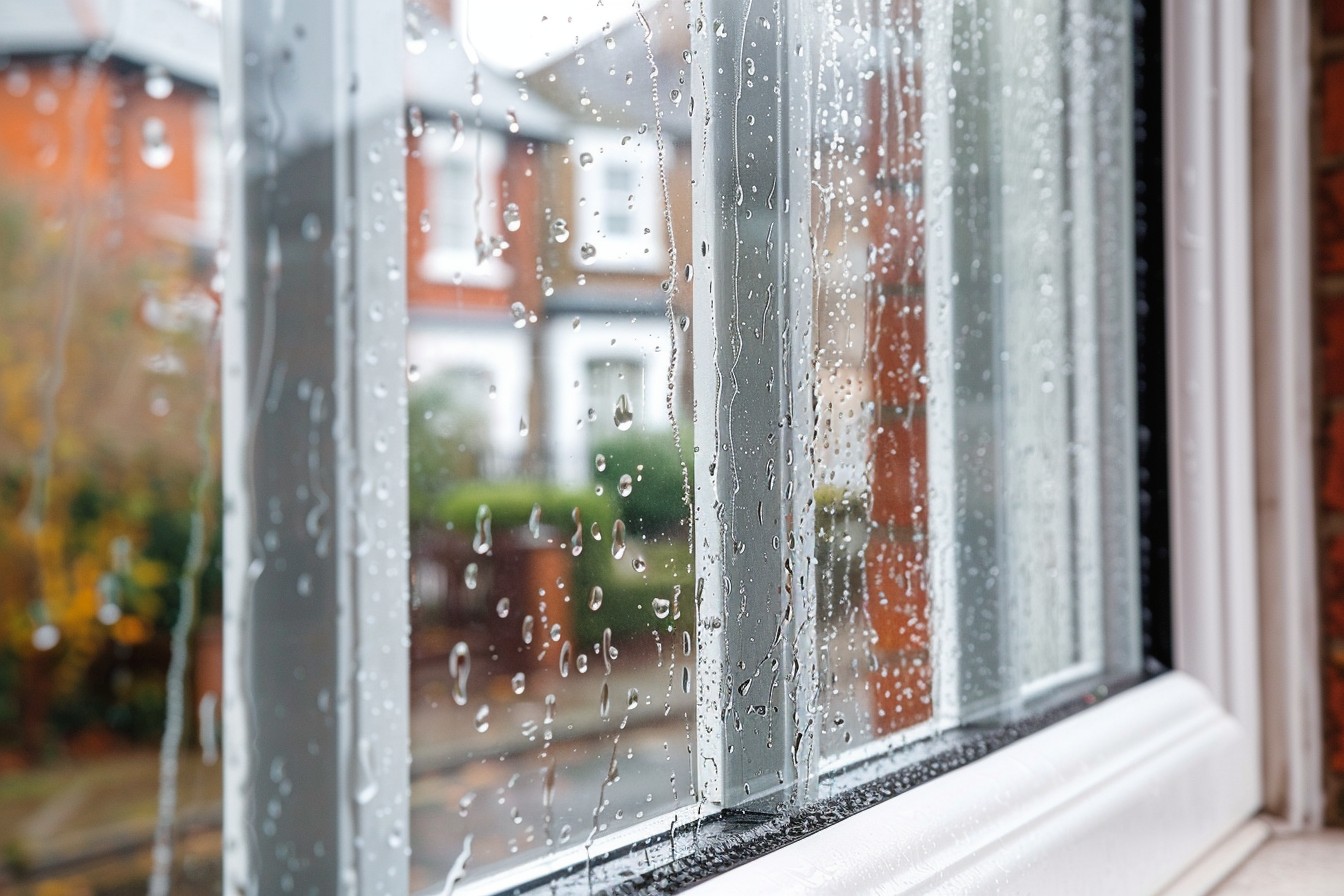
There is a particular kind of window in London – and you have almost certainly lived with one – that looks dusty even after you’ve cleaned it. The glass has a milky, slightly frosted quality in certain lights, a ghostly film that no amount of standard window cleaner seems to shift. Spray it, wipe it, buff it with a clean cloth, and the result is exactly what you started with, except now there are also streaks. This is not a cleaning technique problem. This is a hard water problem, and in London it is a more persistent, more chemically stubborn, and more structurally interesting challenge than most homeowners realise. Understanding why it happens – and why it happens with particular enthusiasm in this city – is the first step towards actually doing something about it.
Why London Has A Hard Water Problem
The Geology Beneath The City
London sits on a chalk and limestone basin. The groundwater that feeds the capital’s supply percolates through these formations for years before it reaches a tap, dissolving calcium and magnesium carbonate as it travels. By the time water arrives at your window – whether as tap water used for cleaning or as rain that has picked up mineral content along the way – it is already carrying a significant dissolved mineral load. Thames Water consistently records some of the highest hardness levels in the country, with readings across much of Greater London typically exceeding 300 milligrams of calcium carbonate per litre. For context, water is classified as hard at 100 milligrams per litre and very hard at 200. London water is not merely hard. It is aggressively, enthusiastically, geologically hard in a way that makes the water in most British cities feel like a mountain spring by comparison.
What Hard Water Does To Glass
When hard water evaporates – whether from cleaning, condensation, or rain – it leaves behind the minerals it was carrying. Calcium carbonate is the primary offender: it deposits as a white, crystalline residue that bonds to glass surfaces. Initially these deposits are relatively easy to remove, being physically present on the surface rather than chemically integrated with it. The problem is that most people don’t remove them immediately, because they are not always visible until the light catches them at the right angle. They accumulate in layer upon invisible layer, each deposit bonding slightly more firmly than the last, until what began as a surface residue has become something closer to a mineral crust. At this stage, standard cleaning products don’t touch them, because standard cleaning products are not designed for mineral dissolution. They are designed for grease, grime, and general surface dirt – an entirely different category of problem.
Why London Windows Specifically Suffer
Pollution, Condensation, And The Urban Moisture Cycle
Hard water deposits do not form in a vacuum. London’s urban environment accelerates the process in ways that softer-water cities simply don’t experience to the same degree. The city’s atmospheric pollution – particulate matter from traffic, sulphur dioxide, nitrogen oxides – combines with moisture on glass surfaces to create a mildly acidic film. This film reacts with calcium carbonate deposits, partially dissolving and then re-depositing them in a cycle that progressively integrates the mineral residue with the glass surface itself. London’s climate compounds the problem further: the city’s relatively mild, damp winters produce persistent condensation cycles on single-glazed and older double-glazed windows, each cycle adding another microscopic layer of mineral deposit. What a homeowner in Manchester might see as a moderate hard water issue is, in London, a significantly more aggressive accumulation process.
The Cleaning Water Problem
Here is an aspect of hard water staining that most people overlook: the water you use to clean your windows is itself part of the problem. In London, standard tap water used for window cleaning deposits minerals as it dries, which is why windows cleaned with tap water in this city so reliably develop that streaky, smeared appearance within hours of being washed. Professional window cleaners address this specifically – pure water systems that filter tap water to near-zero dissolved solid content produce genuinely spot-free results precisely because there are no minerals left to deposit as the water evaporates. For DIY cleaning, this is worth understanding: cleaning London windows with unfiltered tap water is, to a meaningful extent, contributing to the very problem you are trying to solve.
Types Of Hard Water Staining – And Why The Distinction Matters
Not all hard water deposits on glass are the same, and treating them as if they were is why so many removal attempts fail.
Fresh deposits – those formed recently and not yet subjected to multiple wet-dry cycles – are primarily calcium carbonate sitting on the glass surface. These are soluble in mild acid and can be removed relatively easily with the right approach. Long-term deposits – those that have accumulated over months or years – are a different matter. Repeated wet-dry cycling causes calcium silicate to form as calcium carbonate reacts with the silicon dioxide in the glass itself. This is no longer simply a deposit on the glass surface; it is a chemical bond with it. These older stains require more aggressive treatment, and in some cases – particularly on older, softer glass – may leave the surface permanently etched even after the mineral content is removed. This distinction between surface deposit and glass-integrated stain is the single most important thing to understand before reaching for any removal product.
How To Actually Remove Hard Water Stains
Starting With Mild Acid
The correct approach to fresh and moderately established hard water stains is mild acid, because calcium carbonate dissolves readily in acidic conditions. White vinegar – a dilute solution of acetic acid – is the accessible starting point. For light deposits, applying undiluted white vinegar to the glass with a cloth, leaving it for five to ten minutes, and then wiping with a clean microfibre cloth will remove most of the mineral residue. For more established staining, a longer dwell time – up to thirty minutes – improves results considerably. Citric acid, dissolved in warm water at roughly one tablespoon per 500 millilitres, is more effective than vinegar for heavier deposits and leaves no odour. Apply it, allow it to work, and remove it with a clean damp cloth followed immediately by a dry one. The key in both cases is the dwell time: acid removes calcium carbonate through chemical reaction, not through physical scrubbing, and that reaction requires time to work.
Commercial Removers And When To Use Them
For persistent staining that vinegar and citric acid have not fully resolved, dedicated limescale removers designed for glass are the appropriate next step. Products formulated specifically for glass surfaces use buffered acid systems that are strong enough to dissolve established mineral deposits without the surface-etching risk of industrial descalers. The critical distinction here is between products designed for glass and those designed for bathroom tiles, kettle elements, or general household limescale – the latter are often too aggressive for window glass and can cause irreversible surface damage. Apply any commercial remover strictly according to its instructions, paying particular attention to dwell time limits. Leaving an acid-based product on glass for longer than recommended does not improve the result; it increases the risk of etching the surface permanently.
The Mechanical Question
For very heavy mineral encrustation, some light mechanical action may be needed alongside chemical treatment. A plastic razor blade or a dedicated glass scraper, used carefully on wet glass at a low angle with a lubricating layer of cleaning solution, can dislodge loosened mineral deposits that chemical treatment has broken down but not fully removed. This is not a technique for routine use or for use on coated glass, tinted glass, or any surface that is not confirmed to be plain float glass. Used appropriately on the right surface, it is effective. Used carelessly or on unsuitable glass, it produces scratches that are significantly more visible and permanent than the staining it was meant to address.
Preventing Recurrence
Removing hard water stains is a satisfying achievement that becomes considerably less satisfying when the same stains reappear within a few weeks. Prevention comes down to two things: the water used for cleaning and the frequency of maintenance. Using filtered or deionised water for window cleaning – even if that simply means buying demineralised water for occasional DIY cleans – eliminates the primary source of new mineral deposits. Cleaning windows more frequently, rather than less, keeps individual deposit layers thin and therefore easy to remove before they establish the chemical bonds that make them difficult. A window cleaned monthly in London will never develop the kind of entrenched hard water staining that a window cleaned annually will accumulate. This is the maintenance logic that prevents a manageable surface chemistry problem from becoming a structural one.
So, What’s The Verdict?
Hard water staining on London windows is not a cosmetic inconvenience in the way that ordinary dust or smearing is. It is an ongoing chemical process driven by genuine geological and environmental factors that are specific to this city, and it compounds over time in ways that make long-neglected windows meaningfully harder to restore than recently neglected ones. The good news is that the chemistry that creates the problem also points directly to the solution: calcium carbonate dissolves in acid, fresh deposits are far easier to remove than established ones, and the water used during cleaning is as important as the technique applied. Understanding the problem properly – which most cleaning product labels notably decline to explain – is, in this case, most of the battle.